The quiet arithmetic of the Colosseum
Fifty thousand spectators, eighty arched entrances, a few minutes to empty the stands. The Colosseum was, above all, a problem of numbers solved in stone.
Most visitors remember the Colosseum for its scale. What deserves more attention is its logic. Behind the ruined façade lies one of antiquity’s most elegant pieces of crowd engineering — a building designed, first and foremost, to move people.
Eighty doors, and a plan
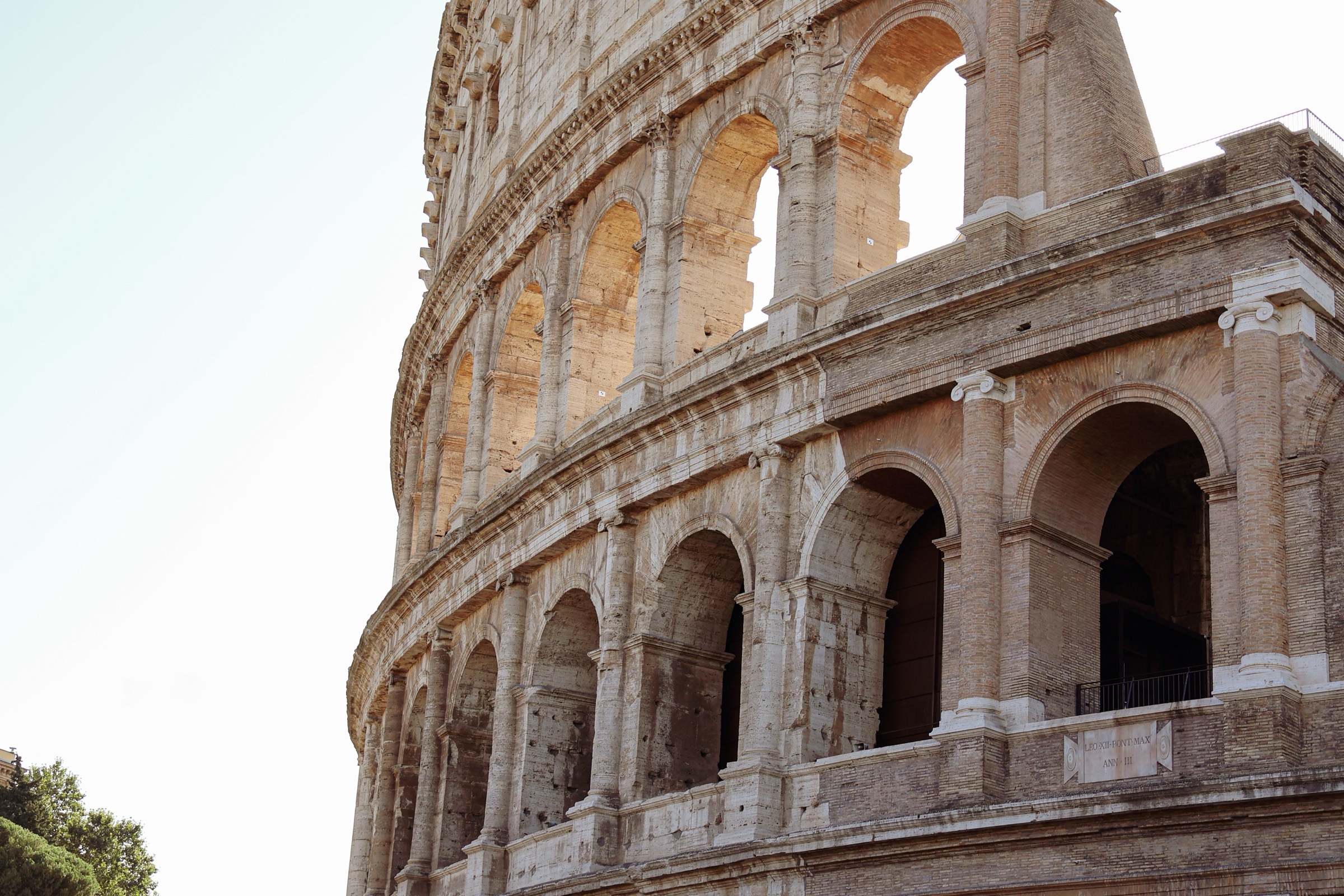
The amphitheatre had eighty ground-level arches. Seventy-six were numbered; spectators carried tokens matching an entrance, a stairway and a tier. There was no queue in the modern sense, because the crowd never converged on a single point. It dispersed the moment it arrived.
Contemporary accounts claim the stands could be cleared in minutes. Whether or not the figure is exact, the ambition behind it is unmistakable.
The corridors that made this possible — the vomitoria — take their name from the Latin for “to spill out”. They did exactly that, releasing the audience in even streams rather than a single dangerous surge.
Reading the ruin
Stand at the northern edge today and the system is still legible: the ring of arches, the fractured staircases, the hierarchy of tiers rising away from the arena. The higher your seat, the lower your standing — a social order written into the architecture itself.
It is easy to walk past all of this on the way to the photograph. Slow down, and the stone starts to explain itself.
The Journal, in your inbox
Twice a month, the stories worth the detour. Nothing else, and your address stays with us.
Nothing reaches beehiiv until you tick this box. Read our privacy policy